
Reviews...
"Fangs: The Blood truly has it all — fantasy, intrigue, action, and adventure woven seamlessly through different times and places in history. The story bursts with vampires, ghouls, and supernatural forces, yet at its heart lies a hero grappling with his own identity and inner conflicts.
From the first chapter to the last, the plot delivers unexpected twists and turns that kept me completely hooked. Every fight scene crackles with energy, and every moment of reflection adds depth to the main character’s journey. Just when I thought I knew where the story was going, it surprised me again.
By the time I reached the final page, I didn’t want it to end. I was left wanting more — eager to dive into the next installment to uncover more about the hero’s past and what lies ahead.
If you’re looking for a book that blends heart, history, and high-stakes fantasy, this one is an absolute must-read."
Irena Zappia
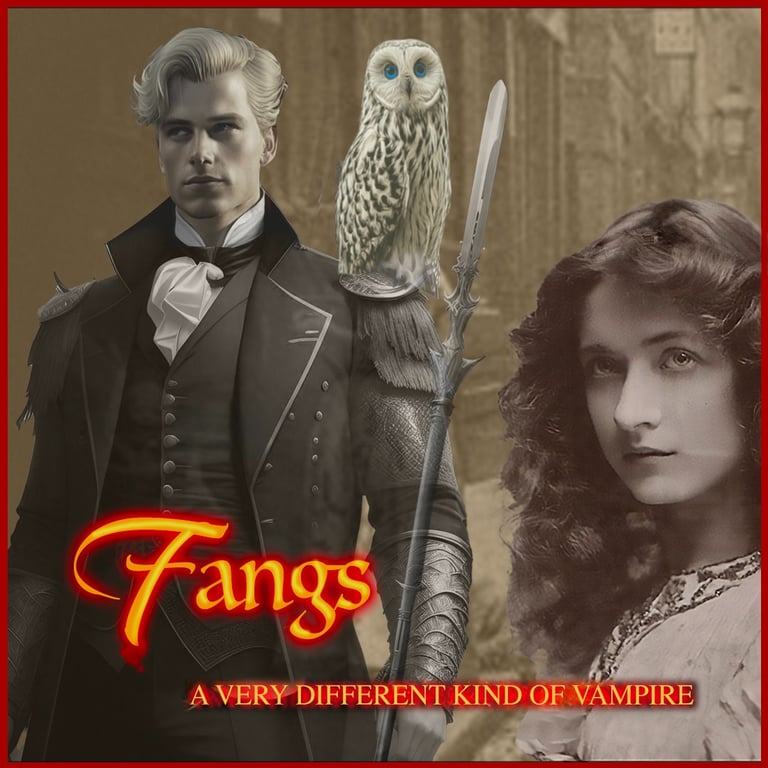
VAMPIRE VIGILANTE London 1888
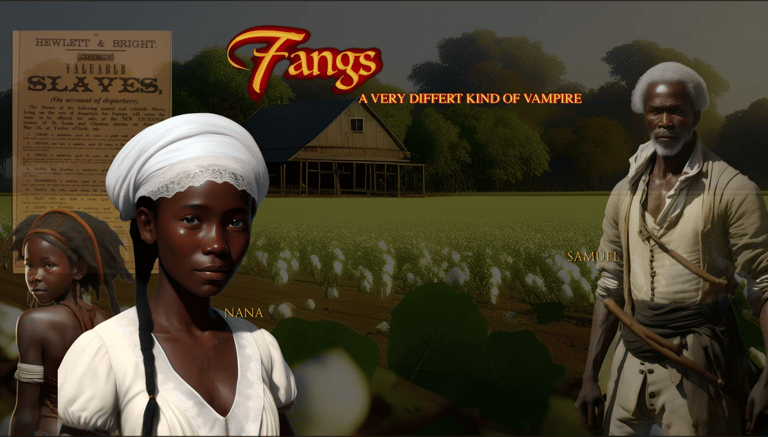
SAMUEL and NANA. Chaffield slaves 1801
Diane Taylor writes...
"Fangs is a thrilling page turner! Such memorable characters!
The story awakened all my senses and elicited emotions of excitement, passion, and fear! I couldn't put it down!"
Joan Sabrina Asgarkhan writes...
"Fangs is not a typical vampire book. The author invites us into different realities over different time periods that tackle everyday issues we all face to this day.
It explores morality, immortality, greed, addiction, corruption, power, love and the desire to stay human.
This novel encourages you to look within and face your own shadows and question the systems around you.
The Vampires you will get acquainted with aren’t just monsters, they are metaphors for the parasitic systems in place that drain us, socially, emotionally, spiritually.
Fangs, it’s about you, me, us. It’s about remembering what it means to be human when humanity itself feels extinct today."
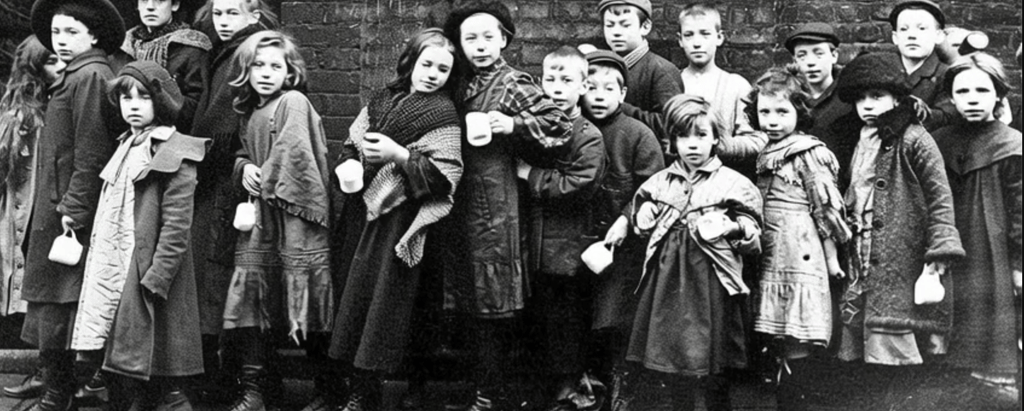
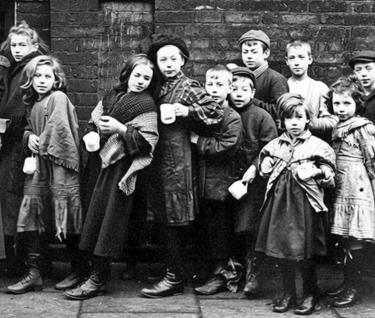
THE SPITALFIELDS NIPPERS London 1888
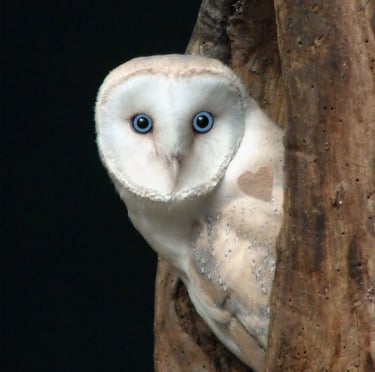
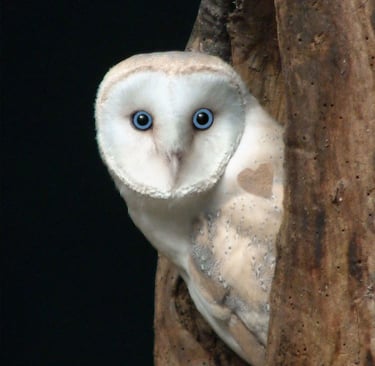
OWL London 1888 - NYC 2001
Kim Crenshaw writes...
"This novel unfolds across three distinct eras—the colonial occupation of Trinidad in the early 1700s, smog-filled, industrial England in the 1800s, and early 2000s New York City—using time itself as a powerful narrative device. At its core, the story is about one man’s struggle to remain compassionate and morally grounded after losing his humanity in the most literal sense. He is immortal, undead, transformed into a kind of vampire, yet fiercely resisting far darker forces—true vampires who feed not merely on blood, but on the souls of their victims.
The author’s greatest strength lies in atmosphere and immersion. The Trinidad chapters are visceral and haunting; the reader feels the heat, the brutality of plantation life, the suffering of the enslaved, and the willful ignorance of those who profit from it. The sense of place is so vivid that the setting itself becomes a character. This immersive quality continues as the story shifts to nineteenth-century England, where the narrative descends into a polluted, dark, and gritty underworld. Coal smoke chokes the air, streets are oppressive and unforgiving, and the novel exposes the harsh realities of poverty, moral decay, and neglect. The portrayal of orphaned children struggling to survive on these filthy streets is particularly affecting and reinforces the book’s recurring concern with innocence lost and humanity tested.
The story is anchored by its central character, who begins life as the plantation owner’s son in Trinidad and evolves into an immortal being burdened by grief, rage, and memory. His journey is driven by a desire for revenge—his life and his great love having been violently taken from him—but what makes the character compelling is his refusal to abandon empathy for the living. His internal conflict between vengeance and compassion gives the novel emotional depth and prevents it from becoming a conventional supernatural tale.
The book also weaves in rich explorations of voodoo and spiritual traditions from multiple cultures, grounding its supernatural elements in history, belief, and place rather than fantasy alone. These elements deepen the story’s authenticity and reinforce its themes of power, loss, and survival across centuries.
By the novel’s conclusion, the reader is left with a powerful sense of continuation. The ending feels less like a final chapter and more like a threshold, creating an urgent desire to follow the character beyond the last page. If this is the opening volume of a trilogy, it succeeds beautifully in laying a foundation that compels the reader to immediately reach for the next book. Overall, it is an atmospheric, emotionally resonant, and ambitious work—one that lingers long after it ends."